
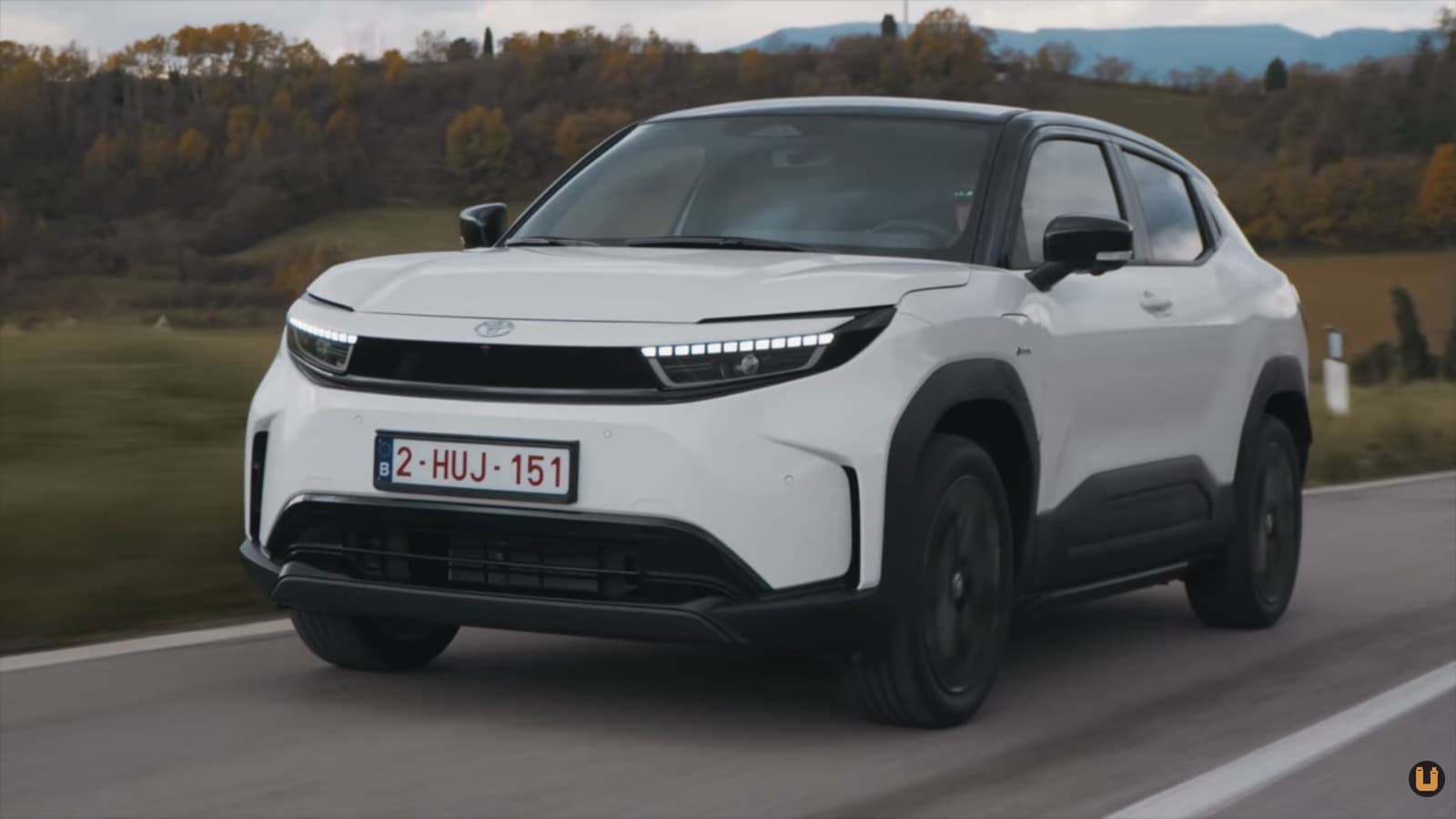
Exterior Design and Practicality
The Urban Cruiser carries Toyota’s familiar hammerhead eye design at the front, paired with arrow-like details and chunky plastic cladding along the sides. The XL model features 19-inch wheels, while entry-level trims get 18-inch wheels. A black roof, sunroof, and black mirror caps add contrast, while the charging port sits on the front wing.
At the rear, a partial-width light bar and modest boot space highlight the car’s limitations. The boot offers just 244 liters of storage, expandable to 310 liters with sliding rear seats or 566 liters with seats folded. Even then, it remains smaller than many hatchbacks, making practicality a weak point.
Interior Space and Comfort
Rear passenger space is tight, especially for taller adults. While knee room is acceptable, headroom is limited, and sliding the seats forward for extra boot space eliminates legroom entirely. The middle seat is narrow and raised, making it unsuitable for three adults. On the plus side, ISOFIX mounts, USB-C chargers, and split sliding seats add some versatility for families with children.
Up front, the cabin features a two-spoke steering wheel, a 10.25-inch driver display, and a 10.1-inch infotainment screen. Unfortunately, the infotainment system is slow to operate, and accessing climate controls requires navigating menus, which becomes frustrating when using Apple CarPlay or Android Auto. Practical touches include a wireless charger, cup holders, decent-sized door pockets, and a full-width glove box. However, headroom in the passenger seat is compromised by the sunroof design.
Charging and Battery Options
UK buyers can choose between two battery sizes: 49 kWh or 61 kWh. Charging speeds are underwhelming, with DC fast charging from 10 to 80 percent taking around 45 minutes. Home charging on a 7 kW wall box takes about nine and a half hours, making a home charger essential for convenience.
Performance varies slightly between the two battery options. The smaller battery delivers 142 PS, while the larger offers 172 PS. Both reach 93 mph, with 0–60 mph times of 9.6 seconds and 8.7 seconds respectively. Range is rated at 213 miles for the smaller battery and 264 miles for the larger one, though real-world efficiency falls short of official figures.
Driving Experience
On the road, the Urban Cruiser EV struggles to impress. Ride quality feels unsettled—too bouncy over rough surfaces yet lacking composure in corners. Steering is numb and inconsistent, with odd weighting during sharper turns. Driving modes are limited to Eco and Sport, neither delivering standout efficiency or excitement.
The car offers three levels of regenerative braking, which can help efficiency in city driving. However, overall dynamics feel uninspired, and the Urban Cruiser lacks the refinement expected from Toyota’s established hybrid models.
Suzuki Connection
Much of the Urban Cruiser’s design and feel stems from its Suzuki Vitara roots. From the exterior styling to the interior layout and driving dynamics, the car feels more Suzuki than Toyota. This shared platform explains why the Urban Cruiser doesn’t fully embody Toyota’s usual polish and innovation.
Conclusion
The 2026 Toyota Urban Cruiser EV is a welcome addition to Toyota’s electric lineup, but it comes with compromises. Charging speeds are slow, boot space is limited, and ride quality feels unfinished. While it may suit city drivers who want a compact electric crossover with Toyota branding, it struggles to stand out in a competitive market.
Small, expensive, and hard to love—the Urban Cruiser EV shows Toyota is entering the segment, but it may leave buyers wanting more.